Sale!

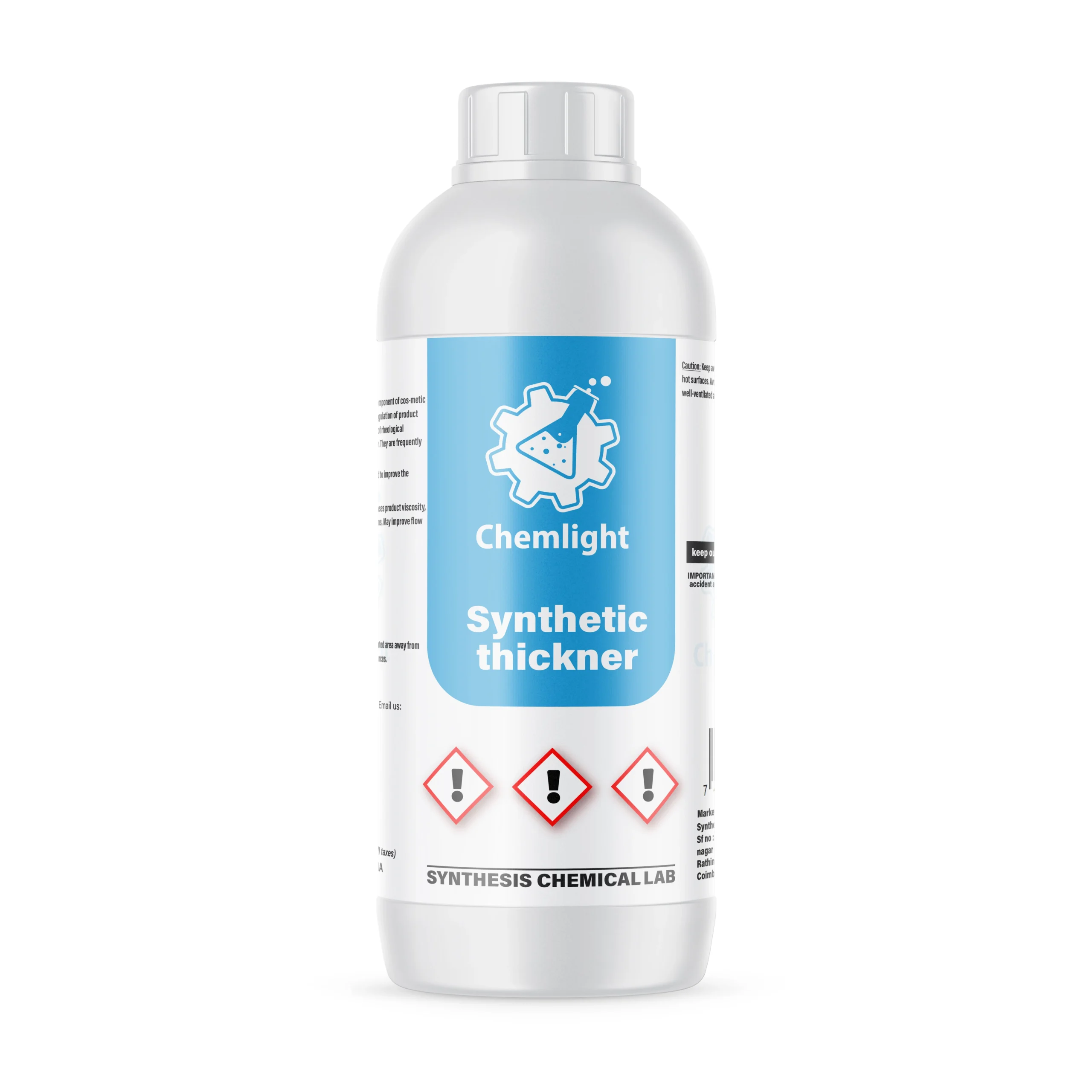
Synthetic Thickener

Synthetic thickeners are advanced, viscosity-modifying agents used across industries like cosmetics, food, pharmaceuticals, and coatings. These thickeners improve the texture, stability, and performance of products, providing consistent viscosity without altering key properties. Ideal for formulations requiring controlled viscosity, they are commonly used in creams, lotions, paints, adhesives, and drilling fluids. Synthetic thickeners offer enhanced texture, improved spreadability, and formulation stability, making them essential for high-quality products.”

439.004,399.00

Free Free Free Shipping | Ships in 24hrs!

Free Shipping

Secure Transaction

Expert Support

Applications
Synthetic thickeners are versatile additives used across various industries to control viscosity, improve texture, and enhance product performance. Below are some common applications for synthetic thickeners:

1. Cosmetics and Personal Care:

  • Lotions & Creams: Synthetic thickeners are used to increase the viscosity, giving lotions and creams a smooth, rich texture without making them greasy.
  • Shampoos & Conditioners: Helps achieve the desired consistency while preventing separation of ingredients, ensuring uniformity and ease of application.
  • Gels: Provides the necessary viscosity for clear gels and other water-based formulations, improving their texture and stability.
  • Serums: Enhances the formulation’s texture, making it easier to apply and ensuring a silky smooth feel without feeling heavy.
  • Toothpaste: Improves the consistency and spreadability of toothpaste, providing a thicker formula without affecting its effectiveness.

2. Pharmaceuticals:

  • Oral Suspensions: Synthetic thickeners can be used in pharmaceutical liquids to improve viscosity, making the suspension easier to swallow and preventing sedimentation.
  • Topical Creams & Ointments: Used to improve the texture and spreadability of topical products, ensuring smooth application and enhanced skin coverage.
  • Gels for Controlled Release: Synthetic thickeners help create gels that provide controlled drug release over time, offering better therapeutic effects.

3. Food and Beverage:

  • Sauces & Dressings: Synthetic thickeners are commonly used to enhance the viscosity of sauces, gravies, and dressings, providing the desired mouthfeel and texture without changing the flavor.
  • Soups and Creams: Helps achieve the right consistency in soups, bisques, and creamy dishes, offering a smooth texture that improves the eating experience.
  • Frozen Foods: Used to stabilize emulsions in frozen desserts like ice cream, preventing the formation of ice crystals and improving the overall texture.
  • Beverages: Used in drinks like smoothies and protein shakes to create a thicker, more indulgent texture without affecting taste.

4. Paints & Coatings:

  • Water-Based Paints: Synthetic thickeners are essential in water-based paints to control the flow properties, improve suspension stability, and ensure a smooth, even application.
  • Inks: Used in printing inks to adjust the viscosity and enhance the printing quality, providing smooth coverage and control during the application process.
  • Coatings: Used in coatings for industrial and architectural applications, providing the desired film thickness and spreading properties.

5. Adhesives and Sealants:

  • Glue Formulations: Synthetic thickeners help modify the viscosity of adhesives, improving ease of application, control over flow, and drying time.
  • Sealants: Ensuring easy application and preventing drips or sagging during use.

6. Detergents and Cleaning Products:

  • Dishwashing Liquids & Surface Cleaners: Synthetic thickeners help to increase the viscosity of cleaning products, improving spreadability and performance.
  • Laundry Detergents: Used to stabilize and thicken liquid detergents, enhancing the effectiveness of the detergent while ensuring it remains easy to handle.

7. Agriculture:

  • Pesticides & Herbicides: Synthetic thickeners are added to agricultural chemicals to improve spreading, adhesion, and penetration, ensuring effective application on plant surfaces.
  • Fertilizer Solutions: Used to adjust the viscosity of liquid fertilizers for better distribution during application.

8. Oil & Gas:

  • Drilling Fluids: Synthetic thickeners are critical in the formulation of drilling fluids, helping to control fluid viscosity for proper lubrication, cooling, and waste removal during drilling operations.
Synthetic thickeners are a key component in many industries, improving the quality and functionality of products while enhancing user experience, stability, and performance.
 Synthetic thickeners are versatile additives used across various industries to control viscosity, improve texture, and enhance product performance. Below are some common applications for synthetic thickeners:

1. Cosmetics and Personal Care:

  • Lotions & Creams: Synthetic thickeners are used to increase the viscosity, giving lotions and creams a smooth, rich texture without making them greasy.
  • Shampoos & Conditioners: Helps achieve the desired consistency while preventing separation of ingredients, ensuring uniformity and ease of application.
  • Gels: Provides the necessary viscosity for clear gels and other water-based formulations, improving their texture and stability.
  • Serums: Enhances the formulation’s texture, making it easier to apply and ensuring a silky smooth feel without feeling heavy.
  • Toothpaste: Improves the consistency and spreadability of toothpaste, providing a thicker formula without affecting its effectiveness.

2. Pharmaceuticals:

  • Oral Suspensions: Synthetic thickeners can be used in pharmaceutical liquids to improve viscosity, making the suspension easier to swallow and preventing sedimentation.
  • Topical Creams & Ointments: Used to improve the texture and spreadability of topical products, ensuring smooth application and enhanced skin coverage.
  • Gels for Controlled Release: Synthetic thickeners help create gels that provide controlled drug release over time, offering better therapeutic effects.

3. Food and Beverage:

  • Sauces & Dressings: Synthetic thickeners are commonly used to enhance the viscosity of sauces, gravies, and dressings, providing the desired mouthfeel and texture without changing the flavor.
  • Soups and Creams: Helps achieve the right consistency in soups, bisques, and creamy dishes, offering a smooth texture that improves the eating experience.
  • Frozen Foods: Used to stabilize emulsions in frozen desserts like ice cream, preventing the formation of ice crystals and improving the overall texture.
  • Beverages: Used in drinks like smoothies and protein shakes to create a thicker, more indulgent texture without affecting taste.

4. Paints & Coatings:

  • Water-Based Paints: Synthetic thickeners are essential in water-based paints to control the flow properties, improve suspension stability, and ensure a smooth, even application.
  • Inks: Used in printing inks to adjust the viscosity and enhance the printing quality, providing smooth coverage and control during the application process.
  • Coatings: Used in coatings for industrial and architectural applications, providing the desired film thickness and spreading properties.

5. Adhesives and Sealants:

  • Glue Formulations: Synthetic thickeners help modify the viscosity of adhesives, improving ease of application, control over flow, and drying time.
  • Sealants: Ensuring easy application and preventing drips or sagging during use.

6. Detergents and Cleaning Products:

  • Dishwashing Liquids & Surface Cleaners: Synthetic thickeners help to increase the viscosity of cleaning products, improving spreadability and performance.
  • Laundry Detergents: Used to stabilize and thicken liquid detergents, enhancing the effectiveness of the detergent while ensuring it remains easy to handle.

7. Agriculture:

  • Pesticides & Herbicides: Synthetic thickeners are added to agricultural chemicals to improve spreading, adhesion, and penetration, ensuring effective application on plant surfaces.
  • Fertilizer Solutions: Used to adjust the viscosity of liquid fertilizers for better distribution during application.

8. Oil & Gas:

  • Drilling Fluids: Synthetic thickeners are critical in the formulation of drilling fluids, helping to control fluid viscosity for proper lubrication, cooling, and waste removal during drilling operations.
Synthetic thickeners are a key component in many industries, improving the quality and functionality of products while enhancing user experience, stability, and performance
Synthetic Thickener Applications:Synthetic thickeners are versatile additives used across various industries to control viscosity, improve texture, and enhance product performance. Below are some common applications for synthetic thickeners:

1. Cosmetics and Personal Care:

  • Lotions & Creams: Synthetic thickeners are used to increase the viscosity, giving lotions and creams a smooth, rich texture without making them greasy.
  • Shampoos & Conditioners: Helps achieve the desired consistency while preventing separation of ingredients, ensuring uniformity and ease of application.
  • Gels: Provides the necessary viscosity for clear gels and other water-based formulations, improving their texture and stability.
  • Serums: Enhances the formulation’s texture, making it easier to apply and ensuring a silky smooth feel without feeling heavy.
  • Toothpaste: Improves the consistency and spreadability of toothpaste, providing a thicker formula without affecting its effectiveness.

2. Pharmaceuticals:

  • Oral Suspensions: Synthetic thickeners can be used in pharmaceutical liquids to improve viscosity, making the suspension easier to swallow and preventing sedimentation.
  • Topical Creams & Ointments: Used to improve the texture and spreadability of topical products, ensuring smooth application and enhanced skin coverage.
  • Gels for Controlled Release: Synthetic thickeners help create gels that provide controlled drug release over time, offering better therapeutic effects.

3. Food and Beverage:

  • Sauces & Dressings: Synthetic thickeners are commonly used to enhance the viscosity of sauces, gravies, and dressings, providing the desired mouthfeel and texture without changing the flavor.
  • Soups and Creams: Helps achieve the right consistency in soups, bisques, and creamy dishes, offering a smooth texture that improves the eating experience.
  • Frozen Foods: Used to stabilize emulsions in frozen desserts like ice cream, preventing the formation of ice crystals and improving the overall texture.
  • Beverages: Used in drinks like smoothies and protein shakes to create a thicker, more indulgent texture without affecting taste.

4. Paints & Coatings:

  • Water-Based Paints: Synthetic thickeners are essential in water-based paints to control the flow properties, improve suspension stability, and ensure a smooth, even application.
  • Inks: Used in printing inks to adjust the viscosity and enhance the printing quality, providing smooth coverage and control during the application process.
  • Coatings: Used in coatings for industrial and architectural applications, providing the desired film thickness and spreading properties.

5. Adhesives and Sealants:

  • Glue Formulations: Synthetic thickeners help modify the viscosity of adhesives, improving ease of application, control over flow, and drying time.
  • Sealants: Used to enhance the thixotropic properties of sealants, ensuring easy application and preventing drips or sagging during use.

6. Detergents and Cleaning Products:

  • Dishwashing Liquids & Surface Cleaners: Synthetic thickeners help to increase the viscosity of cleaning products, improving spreadability and performance.
  • Laundry Detergents: Used to stabilize and thicken liquid detergents, enhancing the effectiveness of the detergent while ensuring it remains easy to handle.

7. Agriculture:

  • Pesticides & Herbicides: Synthetic thickeners are added to agricultural chemicals to improve spreading, adhesion, and penetration, ensuring effective application on plant surfaces.
  • Fertilizer Solutions: Used to adjust the viscosity of liquid fertilizers for better distribution during application.

8. Oil & Gas:

  • Drilling Fluids: Synthetic thickeners are critical in the formulation of drilling fluids, helping to control fluid viscosity for proper lubrication, cooling, and waste removal during drilling operations.
Synthetic thickeners are a key component in many industries, improving the quality and functionality of products while enhancing user experience, stability, and performance.

Cosmetics and Personal Care:

  • Lotions, Creams, and Moisturizers:
    • Usage Rate: 0.5% to 3%
    • Purpose: To achieve the desired viscosity, smooth texture, and spreadability.
  • Shampoos and Conditioners:
    • Usage Rate: 0.2% to 2%
    • Purpose: To thicken the product while maintaining flow properties for easy application.
  • Gels (Facial, Hair, Body):
    • Usage Rate: 0.5% to 3%
    • Purpose: To provide a stable, gel-like consistency.
  • Toothpastes:
    • Usage Rate: 1% to 5%
    • Purpose: To achieve the right consistency and texture for easy dispensing.

2. Pharmaceuticals:

  • Oral Suspensions:
    • Usage Rate: 0.5% to 2%
    • Purpose: To ensure uniform dispersion of active ingredients and create a thicker, more palatable solution.
  • Topical Ointments & Creams:
    • Usage Rate: 1% to 5%
    • Purpose: To enhance texture, stability, and spreadability for skin application.
  • Controlled-Release Gels:
    • Usage Rate: 0.5% to 3%
    • Purpose: To form gels that provide controlled drug release.

3. Food and Beverage:

  • Sauces, Dressings, and Condiments:
    • Usage Rate: 0.2% to 1%
    • Purpose: To increase viscosity and provide a smooth, stable texture.
  • Soups and Gravies:
    • Usage Rate: 0.1% to 0.5%
    • Purpose: To provide the desired thickness and mouthfeel without altering flavor.
  • Ice Cream & Frozen Desserts:
    • Usage Rate: 0.3% to 1%
    • Purpose: To prevent ice crystal formation and provide a creamy texture.
  • Beverages (Smoothies, Protein Shakes):
    • Usage Rate: 0.1% to 0.5%
    • Purpose: To increase viscosity without altering the taste.

4. Paints and Coatings:

  • Water-Based Paints:
    • Usage Rate: 0.5% to 3%
    • Purpose: To adjust the viscosity and improve application properties.
  • Inks:
    • Usage Rate: 0.2% to 1%
    • Purpose: To control the viscosity and ensure smooth printing.
  • Industrial Coatings:
    • Usage Rate: 0.5% to 2%
    • Purpose: To improve spreading, film formation, and application ease.

5. Adhesives and Sealants:

  • Adhesives:
    • Usage Rate: 1% to 5%
    • Purpose: To adjust the viscosity, ensuring controlled application and adhesion properties.
  • Sealants:
    • Usage Rate: 1% to 3%
    • Purpose: To provide thixotropic properties that prevent dripping or sagging.

6. Detergents and Cleaning Products:

  • Dishwashing Liquids:
    • Usage Rate: 0.5% to 2%
    • Purpose: To improve viscosity, control flow, and enhance cleaning efficiency.
  • Laundry Detergents:
    • Usage Rate: 0.5% to 2%
    • Purpose: To thicken the formulation and improve cleaning performance.
  • Surface Cleaners:
    • Usage Rate: 0.3% to 2%
    • Purpose: To increase viscosity for better application and cleaning effectiveness.

7. Agriculture:

  • Pesticides and Herbicides:
    • Usage Rate: 0.2% to 1%
    • Purpose: To improve adhesion and spreading for more effective application.
  • Fertilizers:
    • Usage Rate: 0.1% to 0.5%
    • Purpose: To increase viscosity for better distribution during spraying.

8. Oil and Gas:

  • Drilling Fluids:
    • Usage Rate: 0.5% to 2%
    • Purpose: To control the viscosity of drilling muds for effective lubrication, cooling, and waste removal.

9. Textile Industry:

  • Printing Pastes:
    • Usage Rate: 1% to 3%
    • Purpose: To thicken dyes and printing pastes for better fabric adhesion.

10. Biotechnology:

  • Cell Culture Media:
    • Usage Rate: 0.1% to 0.5%
    • Purpose: To adjust the viscosity of media for better cell growth and interaction.

General Considerations:

  • Formulation Type: The specific usage rate depends on the formulation (e.g., gel, cream, paste) and the desired viscosity or texture.
  • Thickener Type: Different types of synthetic thickeners (e.g., cellulose derivatives, polyacrylic acids, polyurethane-based thickeners) may require different usage rates.
  • Performance Requirements: Higher usage rates may be needed for products requiring high viscosity or more stable suspensions.
In conclusion, the usage rate of synthetic thickeners typically ranges from 0.1% to 5%, depending on the product type and desired viscosity or texture. Manufacturers usually perform trials and tests to find the optimal usage rate for their specific formulations.
When using synthetic thickeners, it’s essential to:
  • Follow health and safety guidelines by wearing protective equipment and avoiding exposure to eyes, skin, or inhalation.
  • Properly store and handle thickeners to maintain their effectiveness and avoid contamination.
  • Adhere to recommended usage rates and test compatibility in formulations.
  • Be mindful of environmental impact and follow proper disposal procedures.
  • Ensure regulatory compliance for the specific application, especially in sensitive industries like food, cosmetics, and pharmaceuticals.
By taking these precautions, you can safely and effectively utilize synthetic thickeners in a wide range of applications.
Happy Client's
0 k+
Products Delivered
5 k+
Job Complete
0 K+
Awards Win
0 +

Powered by Expertise

Experts in Every Chemical

Solution You Need.

We offer end-to-end chemical services including custom formulation, product development, research support, industry consulting, and private/white label manufacturing. Whether you’re a startup or a manufacturer, our team is ready to turn your chemical challenges into scalable solutions.

Tailor-Made Chemical Solutions for Every Application

We develop custom chemical formulas for industries like cosmetics, cleaning, pharma, textiles, and agro. From lab to scale-up, we build what your product needs.

Call Us

(+91) 73581 13141

From Concept to Shelf – We Build Winning Products

Turn your product idea into a market-ready success. We help with formulation, testing, sourcing, packaging, and documentation—all under one roof.

Call Us For Service

(+91) 90433 46686

Expert Support for Academic & Industrial Research

Get technical guidance, lab materials, and documentation support for your research journey in chemical sciences, pharma, and interdisciplinary fields.

Call Us For Service

(+91) 90433 46686

Solve Production and Quality Issues with Experts

Optimize raw material use, improve processes, and fix production challenges. Our consultants bring real-world chemical industry experience to your plant.

Call Us For Service

(+91) 90433 46686

Start Your Chemical Brand – We Do the Heavy Lifting

Launch your own line of personal care, cleaning, or specialty chemical products. We offer ready-to-brand and fully custom private label solutions.

Call Us For Service

(+91) 90433 46686

OUR CUSTOMERS TESTIMONIAL

Real Stories. Real Results.

“I had a great experience with synthesis chemical lab. The service was quick, and the billing was transparent & meet the owner mr suthandhira kumar sir he is genius in all fields of water purification treatments and his advice was a gem for our business Thank you looking forward for more business with you.
 

vishnu

Our lubricant blend came out exactly as required. Chemlight’s lab testing and support made the entire process smooth and stress-free.

Anil Kumar, Automotive Lubricants, Pune

From concept to final batch, Chemlight handled everything for our disinfectant product. Hassle-free experience and excellent technical guidance.
 

Manish Gupta, Institutional Cleaning, Delhi

Chemlight delivered a perfect custom floor cleaner formula. Quick, professional, and exactly matched our market needs. Truly impressed! 

Rajesh Verma, Homecare Chemicals Industry, Mumba

Needed a unique industrial degreaser; Chemlight formulated and tested it faster than expected. Quality is unmatched in the market.
 

Kavita Iyer, Industrial Cleaning, Chennai

The custom skincare cream formulation was spot on. Safe, effective, and ready for commercial production. Highly recommend Chemlight’s expertise.
 

Priya , Cosmetics Manufacturing, Bengaluru

Chemlight’s team understood our needs for a unique adhesive blend. The result was perfect and production-ready in record time.
 

Vivek Desai, Adhesives & Sealants, Ahmedabad

Chemlight turned our homecare product idea into a real, shelf-ready product. Their R&D support is truly next-level.

Sunita Rao, FMCG Homecare, Hyderabad

From prototype to packaging, Chemlight took care of everything for our detergent project. Highly professional and quick turnaround.

Ashok Patel, Detergent Manufacturing, Surat

“Customer Support Is Lightning-Fast, and the Features Keep Getting Better. Our Productivity Has Doubled Since Switching Over. Best Investment We’ve Made in a Long Time!”

Liam Carter

Marketing Strategist

“Easy Setup, Powerful Tools, and Unmatched Reliability. This SaaS Solution Streamlined Our Entire Workflow. We Finally Have Time to Focus on What Matters Our Customers & Core Goals.”

Ava Stone

Fitness Coach

“From Day One, the Experience Was Smooth and Professional. Our Team Loves Using It Daily. It’s Rare to Find Software That Delivers This Much Value So Quickly.”

Noah Brooks

Sales Manager

One place to buy all types of chemicals from fragrance to reverse engineering and product development. Automobile chemicals are of great quality.
 

sanjay

Brand Designer

Got complete thesis assistance, lab trials, and journal publication guidance from Chemlight. Highly valuable for researchers like me.
 

Mithun

Chemlight’s lab access made my PhD research smooth. Real testing, accurate results, and proper documentation every time.
 

Dr. Sanjay Mehta, Academic Research, Jaipur

Excellent product development services! We got complete documentation, lab-tested samples, and scale-up support without any hassle.

Nisha Agarwal, Personal Care Products, Kolkata

Our automotive polish project was completed on time with top-quality lab validation. Chemlight is the partner you can trust.

Deepak Singh, Auto Care Products, Ludhiana

They helped us create an eco-friendly agrochemical product. The formula is stable, effective, and ready for market launch.
 

Ramesh Babu, Agrochemicals, Coimbatore

The PhD mentorship and practical lab support helped me finish my research faster. Chemlight is a great academic partner.
 

Abhishek Reddy, Chemical Engineering Research, Visakhapatnam

One place to buy all types of chemicals from fragrance to reverse engineering and product development. Automobile chemicals are of great quality.
 

Meera Nair, Pharmaceutical Research, Kochi

“Analytics, Automation, Integration—This SaaS Solution Does It All. We’ve Never Felt So in Control of Our Data and Growth. It’s the Backbone of Our Digital Strategy Now.”

Mia Reed

Brand Designer

“It Felt Like a Risk at First, but This Software Paid Off Instantly. Smooth Operations, Happy Team, and Growing Profits. The Best Business Decision We’ve Made This Year.”

Ethan Cole

Tech Lead

“Our Entire Workflow Is Smoother, Faster, and More Accurate Now. What Used to Take Days Happens in Minutes. This Platform Truly Understands Modern Business Needs.”

Social Manager

Fitness Coach

“Finally, a Platform That Actually Delivers on Its Promises. From Setup to Scaling, It’s Been Seamless. We’re Not Just Users—We’re Lifelong Fans of This Product.”

James West

Content Creator

Frequently asked questions

What is a synthetic thickener?
A synthetic thickener is a type of chemical compound used to increase the viscosity of liquids or semi-liquids without significantly changing other properties, such as appearance, flavor, or stability. Synthetic thickeners are typically used in products like paints, cosmetics, foods, adhesives, and pharmaceuticals to improve texture and consistency.
Synthetic thickeners are used in a variety of industries, including:
  • Cosmetics and Personal Care: To thicken creams, lotions, shampoos, and gels.
  • Food and Beverages: To thicken sauces, soups, dressings, and beverages.
  • Pharmaceuticals: In oral suspensions, creams, and gels for controlled drug release.
  • Paints and Coatings: To improve the texture and application properties of paints.
  • Cleaning Products: To adjust viscosity and improve cleaning performance in products like dishwashing liquids and surface cleaners.
Synthetic thickeners work by increasing the intermolecular forces within a liquid, which slows the flow of the material and increases its resistance to movement. They can create a gel-like consistency or provide a smoother texture depending on the formulation. Many thickeners achieve this by forming a network structure within the liquid that entraps water or other solvents.
Some common types of synthetic thickeners include:
  • Polyacrylic Acid (Carbomers): Used in cosmetics and pharmaceuticals to create gels and control viscosity.
  • Cellulose Derivatives (Hydroxyethyl Cellulose): Used in personal care products and food formulations.
  • Polyurethane-Based Thickeners: Often used in paints, coatings, and adhesives for enhanced performance.
  • Polyethylene Glycol (PEG) and its Derivatives: Used in a variety of industrial applications, including paints and coatings.
In cosmetics, synthetic thickeners are typically used at rates of 0.5% to 3% depending on the desired consistency. For example, in lotions and creams, they may be used at around 1% to 2%, while for gels, the usage rate may be slightly higher (up to 3%).
When using synthetic thickeners, it’s important to follow safety guidelines, such as:
  • Wear protective gloves and goggles to avoid skin or eye contact, especially with powdered thickeners.
  • Avoid inhalation of thickener dust. Use in well-ventilated areas or wear a mask if necessary.
  • Follow recommended usage rates to avoid negative effects on the formulation or product stability.
  • Store thickeners properly in airtight containers and in a cool, dry place to prevent clumping or degradation.
Shopping Cart
Synthetic Thickener
439.004,399.00Select options